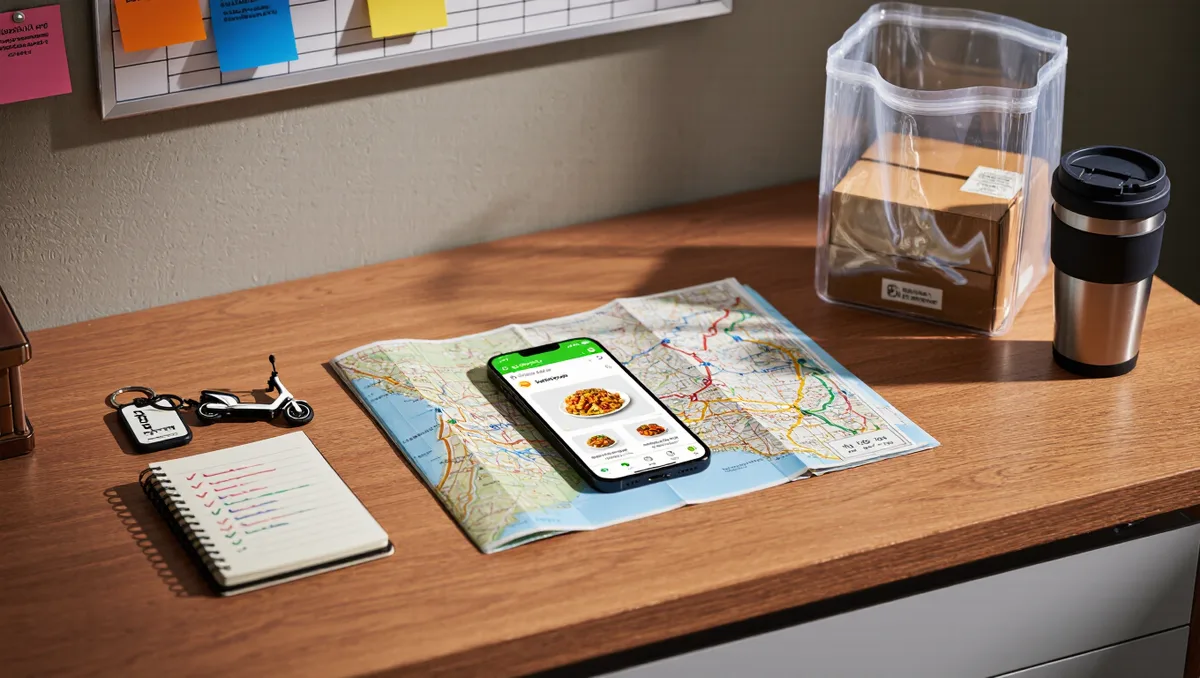
Social commerce is selling that happens inside a social platform, from product discovery to payment, without sending the buyer to a separate website. On Instagram, that can mean a tagged product in a Reel, a shop on a profile, or a checkout completed in the app itself. The important qualification: not every seller or region has access to every step, and platform rules decide which pieces you can use.
The practical question for a small seller is simple. Which link in the chain breaks first? For most, it is not discovery. It is trust, or the friction between a product tag and a completed payment. This piece walks the chain in order and points to where each link can be strengthened.
How does discovery actually start a purchase?
Discovery on Instagram is visual and passive. A buyer sees a product in a Reel, a Story, or an Explore grid, often without shopping intent. A product tag turns that moment into a shopping moment: the tag names the item and opens a product detail view. Per Instagram's product tagging rules, tags must point to items in an approved catalog, which is why catalog hygiene matters before any creative does. Our coverage of what Instagram's product tagging rules mean for your catalog walks through the requirements.
Discovery alone rarely closes a sale. It starts a consideration window that may last days. The seller's job in that window is consistency: the tagged product, the caption, and the profile should tell the same story. A mismatch, say a premium price on a discount-looking feed, is where many small sellers quietly lose the buyer.
Why does trust decide more than reach?
Trust is the buyer's answer to three questions. Is this a real business? Will the product match the post? What happens if it does not? Social commerce compresses all three into a profile visit that lasts seconds.
The signals buyers check are unglamorous. A complete bio with a clear return policy. Posts that show the product in use, not just staged. Comments that the seller answers, especially the critical ones. Our guide on handling buyer questions in Instagram DMs covers the direct-message half of this, which is often where a hesitant buyer makes a final decision.
Written policies carry unusual weight here because the buyer cannot inspect the goods. A clear, plain-language refund and shipping policy does more for conversion than another styled photo. Sellers who draft one should read our piece on writing return policies for social commerce before publishing it.
Where does checkout friction live?
Checkout is the step with the most rules attached. Instagram's in-app checkout, where available, keeps the payment inside the platform. Where it is not available, the tag routes the buyer to the seller's own site, and every extra hop loses some share of buyers. The mechanics, and the drop-off points, are covered in our explainer on how Instagram checkout works.
Friction has a short list of usual suspects. A checkout that asks for an account creation before payment. Shipping costs revealed late. A payment page that loads slowly on a phone. None of these are platform problems; they are seller problems that the platform merely exposes. Fixing them is unglamorous work, and it is the work that pays.
What does eligibility and setup require?
Before any of this runs, the account has to qualify. Instagram's shopping eligibility requirements cover business type, compliance with commerce policies, and a connected catalog. Our breakdown of Instagram's shopping eligibility requirements lists them in order. Sellers connecting their own store can follow our guide to connecting Shopify to an Instagram shop.
There is also a paperwork layer sellers sometimes discover late. Selling in the United States means tax and identity records, and identity documents occasionally need replacing. According to USAGov's Social Security page, the federal portal explains how to get or replace a Social Security card and related benefits, which is the kind of administrative errand a new seller should expect to handle at some point. Business banking, tax forms, and identity verification sit underneath every marketplace, whatever the platform's own checklist says.
What this means for small sellers
The chain is only as strong as its weakest link, and the links are not equal. For a seller with a modest following, the order of operations that the evidence supports is: fix the catalog and eligibility first, write the trust signals second, and only then pour effort into discovery formats like Reels tags and live events. Reversing that order produces traffic that bounces.
Measurement closes the loop. Without tracking which tagged posts produce views, saves, and purchases, a seller cannot tell which link is weak. Our guide on measuring social commerce ROI sets out the basics. Live selling adds one more discovery-and-trust channel; see how live shopping events work on Instagram before committing production time to one.
One closing observation, and it is the piece's one flourish: the platforms supply the storefront, but the ledger is still yours. Discovery, trust, checkout, and records are four links, and the paperwork link never breaks loudly. It breaks quietly, at tax time, when the seller who skipped it wishes they had not.