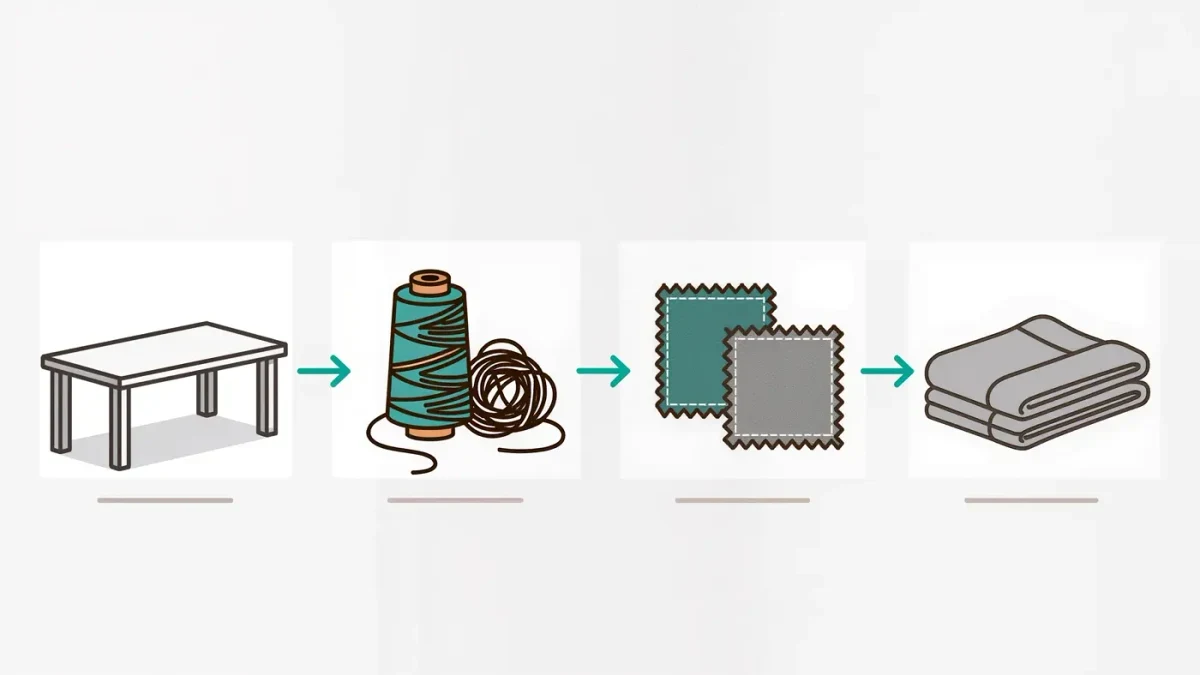
Behind-the-scenes content works when it shows the part of the work your finished posts cannot: the decisions, the mess, and the small failures between the idea and the result. To plan it, split your process into four capture layers — setup, problem, decision, and result — and record one of them at a time in short clips or photos as work happens. The caveat: audiences respond to process that is real, not process performed for the camera. A staged mess reads as staging, and behind-the-scenes content that is secretly polished loses exactly the trust the format exists to build.
Why does behind-the-scenes content perform differently?
Polished posts show competence; process posts show cause. When a follower watches a piece of work take shape — the failed first attempt, the tool that broke, the choice between two options — the finished result carries a story they were part of. That is why a modest process clip often earns more comments than a beautiful final image: it gives viewers something to react to besides approval.
Process content also lowers the barrier to your product or service. For a maker, a consultant, or any service business, the invisible middle of the work is the thing customers cannot evaluate before buying. Showing slices of it — how an order is packed, how a plan is drafted, how a mistake gets caught — answers the question polished posts never address: what would working with you actually be like?
What should you actually show?
Four layers cover almost any working process, and naming them turns "share your process" from vague advice into a shot list:
- Setup — the raw materials, the empty studio, the opened brief. Establishes where the story starts.
- Problem — the thing that went wrong or the obstacle that always appears. The most engaging layer and the most underused.
- Decision — the moment of choosing: two options on the bench, a color test, a paragraph cut. Shows judgment, which is what you actually sell.
- Result — the finished piece, ideally shown in the same frame as part of its own making.
The problem layer deserves emphasis. Creators instinctively hide mistakes and audiences connect through them, not because people enjoy failure but because a solved problem is a story with a shape. A five-second clip of the ruined attempt followed by the fix outperforms a minute of uninterrupted smooth process.
How do you capture process without interrupting it?
The capture habit matters more than the footage quality. Keep the phone within reach at one fixed station — a shelf, a tripod corner, a pocket — and adopt a one-take rule: when a process moment appears, film it once, briefly, and return to work. Twenty to sixty seconds per clip is plenty; behind-the-scenes material is edited down, not directed. Photos work equally well for the setup and decision layers, and a sequence of four photos often tells the story with less interruption than any video.
Do not reconstruct moments later. Re-shooting a mistake that already happened is visible on camera, and it changes how you behave in every future take. Capture what occurs, and if a week produces no usable material, that is information about the process worth sharing rather than hiding.
How often should behind-the-scenes content appear?
A steady rhythm beats heavy bursts. One dedicated process slot per week in the feed, plus informal story fragments whenever real moments occur, keeps the layer present without making the account a process diary. If your pillars already include a process pillar, this slot is that pillar's home; if not, alternate behind-the-scenes weeks with your other supporting content so no more than a fortnight passes without a look inside.
Stories carry most of the volume because most process moments are short-lived: a stuck zipper mid-alteration, a delivery arriving mid-recording, a color test drying. Feed posts get the arcs — a project from brief to delivery condensed into one Reel or carousel — while stories keep the daily texture between them.
What should stay off camera?
Behind-the-scenes does not mean everything behind the scenes. Keep client names, unreleased work under agreement, personal home details, and anything involving other people's faces or property out of frame unless you have their consent. A useful pre-check before publishing any process clip: does it identify a client, expose an agreement, or include someone who did not agree to be filmed? If any answer is yes, crop it, blur it, or shelve it.
Also resist narrating everything. Some of the best process content is silent footage with a one-line caption, because the work itself is the interest. Explaining what viewers can plainly see is the most common way behind-the-scenes clips talk their audience out of paying attention.
How does behind-the-scenes content fit the rest of the plan?
Process content is a supporting pillar, not a replacement for the core teaching or product content the account is known for. Its role is to make the polished posts more believable: viewers who have seen the messy middle read the finished result as evidence rather than as marketing. In a monthly calendar built on pillars, behind-the-scenes takes its rotating share of slots alongside the others, and the two layers reinforce each other.
The fit also runs through formats. A strong behind-the-scenes week produces a Reel for the process slot, story fragments for daily texture, and often a decision-moment photo that doubles as a point-of-view post. Because the material is captured while real work happens, it is the cheapest pillar to keep fed — which is exactly why it is the one worth planning deliberately rather than posting only when a moment happens to go well.
How do you turn captured fragments into posts?
Work from the capture log, not from memory. Every week, review the clips and photos you captured, tag each with its layer, and assemble:
| Fragment type | Best format | Typical use |
|---|---|---|
| Single problem-fix clip | Reel, 15-30 s | Weekly process slot |
| Setup to result sequence | Carousel, 4-8 slides | Project story |
| Decision moment photo | Image post with caption | Point-of-view content |
| Assorted short clips | Stories with captions | Daily texture |
Over a month, the fragments combine into an archive: an honest picture of how the work happens, drawn in real time. That archive is behind-the-scenes planning at its simplest — capture in layers as work occurs, review weekly, and publish the pieces that carry a story rather than the ones that merely fill a slot.